Network Infrastructure | TimeTec
Network Infrastructure
TimeTec offers complete Network Infrastructure solutions alongside our comprehensive PropTech ecosystem, delivering seamless connectivity to support smart building operations. From structured cabling to high-performance network equipment, our infrastructure services are designed to integrate flawlessly with TimeTec’s PropTech solutions—including smart access and elevator control, ELV & IoT automation, smart cashless and touchless parking, visitor management and etc., ensuring a reliable, scalable, and future-ready environment for modern commercial and residential buildings.

Project Scope

shemale cum videos better
First Level
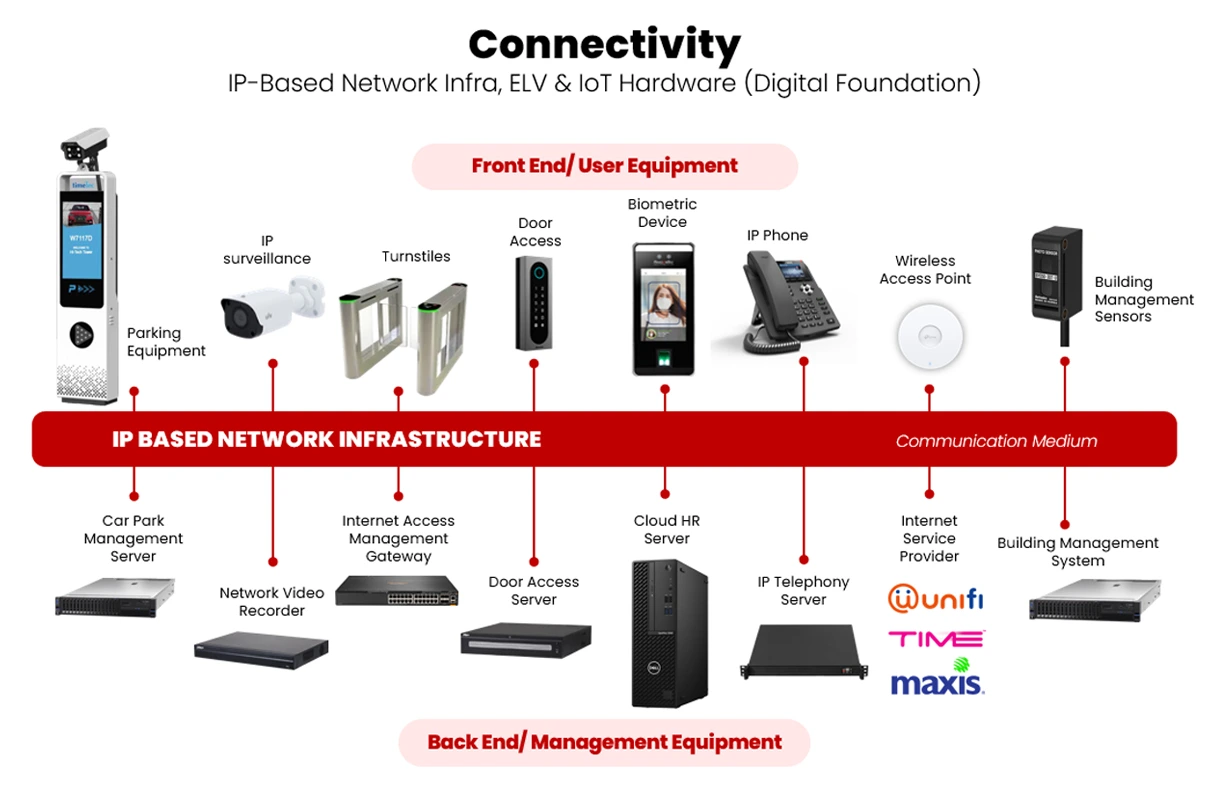
Connectivity

Driven by Hardware
Network Infrastructure, ELV & IoT
(Digital Foundation)

Construction
Pre-Smart Township
shemale cum videos better
Second Level
Engagement

Driven by Software
Cloud Applications & Apps
(Digital Ecosystem)

Operation
Smart Township
shemale cum videos better
Third Level
Digital Lifestyle

Driven by Data
Data Analytics, Agentic AI
(Business Transformation)

Sustainability
Post-Smart Township
shemale cum videos better

What is Network Infrastructure?

Network Infrastructure comprises the hardware and software systems that support connectivity, communication, and data exchange between users, devices, applications, and the internet.

Key Components of Network Infrastructure

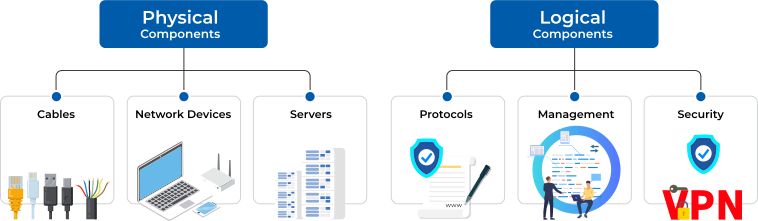
Network infrastructure is typically divided into two main categories: physical and logical components.
Physical Components
These are the tangible elements that form the foundation of a network:

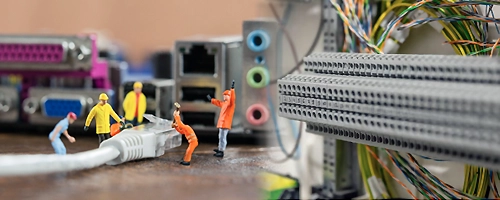
  1. Cabling: Connects network devices and facilitates data transmission. Common types include Ethernet, fiber-optic, and coaxial cables.
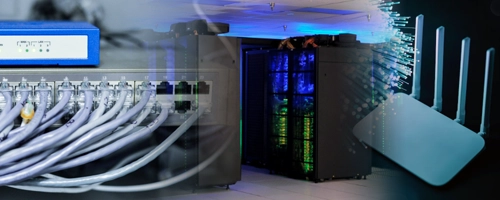
  2. Network Devices: These include routers, switches, and firewalls that direct data traffic, enforce security, and connect various network segments.
  3. Servers: Dedicated machines that provide critical services such as data storage, email, web hosting, databases, and enterprise applications.
Logical Components
These elements define how data flows and how the network is managed and secured:

  1. Protocols: Rules that govern communication between devices on a network. Examples include TCP/IP, HTTP, FTP, and DNS.
  2. Management Systems: Tools and software that monitor, configure, and optimize network performance and resource allocation.
  3. Security Measures: Strategies and technologies such as firewalls, VPNs, access controls, and segmentation to safeguard network data and prevent unauthorized access or cyber threats.
shemale cum videos better

What Is a Well-Designed Network Infrastructure?

A well-designed network infrastructure is essential for any organization that relies on technology to operate effectively. It provides the foundation for integrating emerging technologies and new applications, allowing businesses to remain agile, up-to-date, and competitive in their industries.

For service providers, building a robust network infrastructure means ensuring scalability, high availability, and intelligent load balancing. These elements are critical to maintaining seamless connectivity and reliable system performance—key factors in today’s fast-paced digital environment.

Since network interruptions can never be entirely avoided, it's also vital to adopt streamlined network architectures and automated management tools. These help network administrators quickly identify, isolate, and resolve issues, minimizing downtime and ensuring optimal network functionality.

Shemale Cum Videos Better ((install))

[Current Date] Prepared For: General / Educational Audience Purpose: To provide an overview of the transgender community within the broader LGBTQ+ culture, including key terminology, social dynamics, challenges, and cultural contributions.

The relationship between the transgender community and broader LGBTQ culture remains dynamic. While political efforts sometimes threaten to fracture the alliance—such as attempts to drop the "T" from advocacy groups—the historical and cultural bonds remain resilient.

For most of history, being gay or lesbian was considered a mental illness (removed from the DSM in 1973). For transgender people, the fight is different. While homosexuality is no longer classified as a disorder, remains in the DSM-5, a necessary evil to allow access to gender-affirming healthcare like hormone replacement therapy (HRT) and surgeries.

Despite shared cultural spaces, the transgender community faces distinct socioeconomic and systemic hurdles that set its experience apart from cisgender lesbian, gay, and bisexual individuals. Healthcare and Autonomy shemale cum videos better

Invented the "House" system, creating a model for chosen families and mentorship.

Transgender individuals, particularly trans women of color, experience disproportionately high rates of hate-motivated violence, homelessness, and employment discrimination.

In the 20th century, the modern LGBTQ+ rights movement was galvanized by trans-led resistance against police harassment. Key milestones include: 1959 Cooper Donuts Riot [Current Date] Prepared For: General / Educational Audience

The consolidation of "LGBT" (and later LGBTQ+) as a cohesive political alliance gained momentum in the late 20th century. Activists recognized that while sexual orientation (who you are attracted to) and gender identity (who you are) are fundamentally different, both groups faced the same systemic enemy: rigid, heteronormative societal expectations. Including the "T" unified the communities under a broader banner of gender and sexual diversity. Cultural Contributions and the Language of Pride

As visibility has increased, so too has political backlash. The transgender community currently faces a wave of legislative challenges regarding access to gender-affirming healthcare, participation in sports, and the right to use public facilities that align with their identity. In response, broader LGBTQ+ civil rights organizations have shifted their primary legislative and legal resources toward defending trans rights, recognizing that the attack on bodily autonomy threatens the entire queer community. Summary of Core Contributions Area of Impact Key Contributions to LGBTQ+ Culture

, where gender-nonconforming and trans-feminine people were central to the early fight for rights. UCSF LGBTQ Resource Center 2. Social Challenges and "Minority Stress" For most of history, being gay or lesbian

Within trans communities, there is also tension regarding "passing" (being perceived as one's true gender). Trans people who are cis-passing may experience less discrimination, while non-binary people or those who are visibly trans face the brunt of violence. Similarly, within LGB culture, there is a historical preference for "straight-passing" couples. This shared trauma of respectability politics creates a strange mirror: both communities are constantly asked to be less visible to be more acceptable.

Born in Harlem during the late 20th century, the Ballroom scene was created by Black and Latino trans women and gay men—most notably icons like Crystal LaBeija—as a response to racism within the mainstream pageant circuit. Ballroom culture birthed:

: Incorporate recent research from The Trevor Project showing that young people experiencing gender euphoria have 37% lower odds of considering suicide, framing trans joy as a vital public health metric. Key Thematic Pillars for the Feature Legislative Watch 2026 :

TimeTec: Scope of Capabilities

As a total solution provider and system developer, TimeTec provides the following network infrastructure design and beyond for commercial and residential properties.
shemale cum videos better

1. Requirement Analysis

Start by understanding:
  1. Building layout: Floors, room types, server room location
  2. User profile: No. of users, tenants, departments
  3. Applications: VoIP, CCTV, Wi-Fi, access control, BMS, visitor systems, cloud apps
  4. Performance: Bandwidth, latency, and uptime needs
  5. Regulations: Local cabling/fire codes, cybersecurity, telecom standards

2. Core Components of Network Design

shemale cum videos better A. Structured Cabling System
  1. Backbone cabling: Fiber between server room (MDF) and floor switches (IDFs)
  2. Horizontal cabling: Cat6A or higher from IDFs to wall outlets
  3. Patch panels: in racks for organized connectivity
  4. Cable trays: and conduits to separate power and data
shemale cum videos better B. Network Hardware
  1. Core switch: High-performance L3 switch with redundancy
  2. Access switches: POE-enabled L2 switches on each floor
  3. Routers & Firewalls: To connect to ISP and manage security (e.g., Fortinet, Cisco ASA)
  4. Access Points (APs): Wi-Fi 6 or higher, based on density and layout
  5. UPS: For power backup in server and telecom rooms
shemale cum videos better C. Server Room / Data Center
  1. Environmental control: Cooling, fire suppression
  2. Security: Card access, CCTV
  3. Racks: With proper grounding and labeling
  4. Redundant power: Dual PDU, generator-ready
shemale cum videos better D. WAN & ISP
  1. Fiber connection with SLA from at least 2 ISPs (redundancy)
  2. Consider SD-WAN for multiple sites or cloud traffic optimization

3. Network Segmentation

shemale cum videos better
  1. VLANs for different functions: Office LAN, Guest Wi-Fi, IoT (CCTV, Access control), Voice
  2. QoS policies to prioritize voice/video traffic
  3. ACLs/firewall rules to control inter-VLAN access

4. Wireless Network Planning

shemale cum videos better
  1. Site survey to determine AP placement
  2. Controller-based or cloud-managed system (e.g., Cisco Meraki, Aruba, UniFi)
  3. Separate SSIDs for Guest, Staff, and IoT
  4. Enable roaming and mesh where needed

5. Security Considerations

shemale cum videos better
  1. Firewall with DPI & threat protection
  2. Network Access Control (NAC)
  3. 802.1X authentication for wired/wireless
  4. CCTV network isolation
  5. Backup policies and RTO/RPO planning

6. Redundancy & Scalability

shemale cum videos better
  1. Dual-core switches (stacked or ring topology)
  2. Redundant uplinks (fiber with LACP)
  3. Cloud integration readiness (VPN, Azure/AWS, SaaS)
  4. Allow growth (20–30% headroom in port count, bandwidth, and rack space)

7. Monitoring & Management

shemale cum videos better
  1. Use NMS tools (e.g., PRTG, SolarWinds, Zabbix) to monitor uptime and traffic
  2. SNMP enabled on all devices
  3. Remote access via VPN
  4. Log server for audit trail and diagnostics

8. Documentation

shemale cum videos better
  1. Floor plans with network drops labeled
  2. IP addressing scheme
  3. VLAN mapping
  4. Hardware inventory list
  5. Standard Operating Procedures (SOPs)

9. Testing & Commissioning

shemale cum videos better
  1. Certify cables (Fluke testing)
  2. Test each drop point
  3. Simulate user traffic, failover tests
  4. Sign-off documentation and training for facility management

Optional Systems to Integrate

  1. TimeTec ELV/ PropTech for commercials or residential/ IoT systems
  2. IP-PBX & SIP phones
  3. TimeTec surveillance and CCTVs
  4. TimeTec Access Control System for door, turnstiles & Lift
  5. TimeTec HR for biometric attendance device
  6. TimeTec Smart parking & LPR
  7. TimeTec Maintenance/ Energy monitoring
shemale cum videos better