|
X11-Basic BASIC interpreter/compiler for UNIX(c) 1991-2022 |
 |
Version 1.28
sources:
codeberg
github
|
|
X11-Basic BASIC interpreter/compiler for UNIX(c) 1991-2022 |
|
Version 1.28
sources:
codeberg
github
|
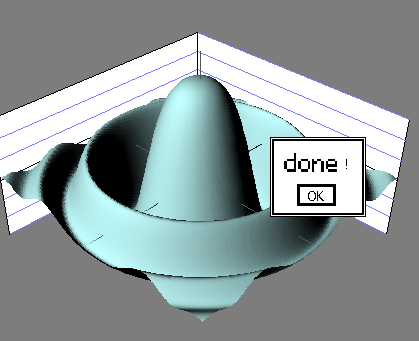 X11-Basic is a dialect of the BASIC programming language with graphics, sound and more.
The syntax is most similar to GFA-Basic on the ATARI-ST. It is a structured dialect with no line numbers. X11-Basic supports complex numbers, big integers and big integer arithmetrics.
X11-Basic is available for UNIX workstations, Linux, Android, MAC-OSX, as well as for MS-WINDOWS. It is also available for the ATARI ST, TomTom car navigation systems and the Raspberry Pi.
A BASIC compiler is included so that you can make stand-alone binaries out of your programs (on all platforms except for Android). The X11-Basic interpreter is fast and small.
(often found at Best Buy), which sometimes featured specialized "Hi-Tech Polymer Gun Packaging" for collectors.
One of the standout action scenes takes place in a deserted Las Vegas street, where Alice and her team face off against a horde of undead and genetically engineered monstrosities. The sequence is expertly choreographed, with a blend of rapid-fire gunplay, martial arts, and high-octane vehicle chases.
Claire’s hand rested on the vial in her jacket, cold and steady. She thought of faces — friends whose infections soured in hours; a child who’d been coherent for a day and then snapped like thin ice. She thought of power: knowledge that might buy time or buy nightmares. She met Lance’s eyes. resident evil afterlife 2010 exclusive
Horror magazine to the film's Toronto production for ten weeks, giving readers a behind-the-scenes look through interviews with the cast and crew well before the film's release.
She found then that choices were not absolutes but a ledger kept in the dark. You could not unmake a decision; you could only hope that your assumptions were true. (often found at Best Buy), which sometimes featured
The defining characteristic of Resident Evil: Afterlife was its groundbreaking utilization of 3D technology. Unlike many films of the era that relied on cheap post-production 3D conversion, Anderson insisted on shooting the entire project natively in 3D.
At the edge of the water, Claire sat with the vial balanced on her knee. The sun had not yet decided to climb; the horizon was a thin, uncertain line. Her thumb rolled the glass. Claire’s hand rested on the vial in her
Compare the of this film to previous Resident Evil entries. Detail the exclusive technology used in the 3D filming. Explore behind-the-scenes stories from the set.
The 3D was not just a gimmick; it was integrated into the choreography. Action scenes were tailored to throw debris, weapons, and infected directly at the audience, enhancing the horror-action hybrid experience. 2. A New Direction: Alice’s Clones and the Umbrella War