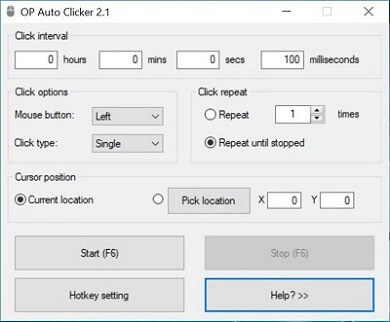
Automate mouse clicks |
 |
|
|
Automate mouse clicks |
|
|
|
In Emperor v. Umi , the specific crime in question was (marrying a second time while a first marriage is still legally valid). The High Court had to determine whether individuals who merely knew about, attended, or provided space for an illegal bigamous marriage could be charged as co-conspirators or abettors to the crime. Key Facts and the 1882 Ruling
: Umi was present at the bigamous marriage ceremony but did not intervene or attempt to stop it. Legal Issue
(Note: If you were instead referring to a specific legal trademark case regarding the "1882" trademark in a different industry, please clarify, as the watch community usage is the most prominent "Emperor vs Umi" context.) emperor vs umi 1882 2021
The title "Emperor" suggests a colonial or imperial context (likely British Empire or a related dominion). The case highlights the tension between the Crown's prerogative and private enterprise. If the court ruled in favor of the Umi 's salvors against the Emperor, it stands as a significant precedent for the protection of commercial salvage rights against arbitrary state seizure—a foundational concept for modern international trade law.
The landmark Indian criminal law case remains a cornerstone of jurisprudence governing criminal complicity . Decided nearly a century and a half ago by the Bombay High Court, this classic ruling continues to heavily influence how modern Indian courts interpret Section 107 of the Indian Penal Code (IPC) (now mirrored in the Bhartiya Nyaya Sanhita, 2023). The core legal question addresses the clear distinction between a passive bystander and an active criminal abettor. In Emperor v
Umi was found guilty of bigamy. The court established that a person could not use conversion as a tactical tool to bypass the legal requirements of dissolving a marriage under their original personal law. The Long Evolution (1882–2021)
The legal battle over free speech in India is anchored by Section 124A of the Indian Penal Code (IPC). This statute defines the offense of sedition. The legal journey from the colonial courtroom dramas of the late 19th century to the Supreme Court interventions of 2021–2022 highlights a deep systemic tension. For over a century, the Indian legal system has struggled to balance state security with individual liberty. The phrase "Emperor vs UMI" represents this exact shift: the transition from a colonial government prosecuting its subjects to a constitutional democracy where citizens challenge the Union of India (UMI) to protect their fundamental rights. 1. The Colonial Roots and the 1882 Framework Key Facts and the 1882 Ruling : Umi
: Umi was charged with abetting the bigamous marriage of another woman. The Act/Omission